Georgia's Storm Season: June Through September
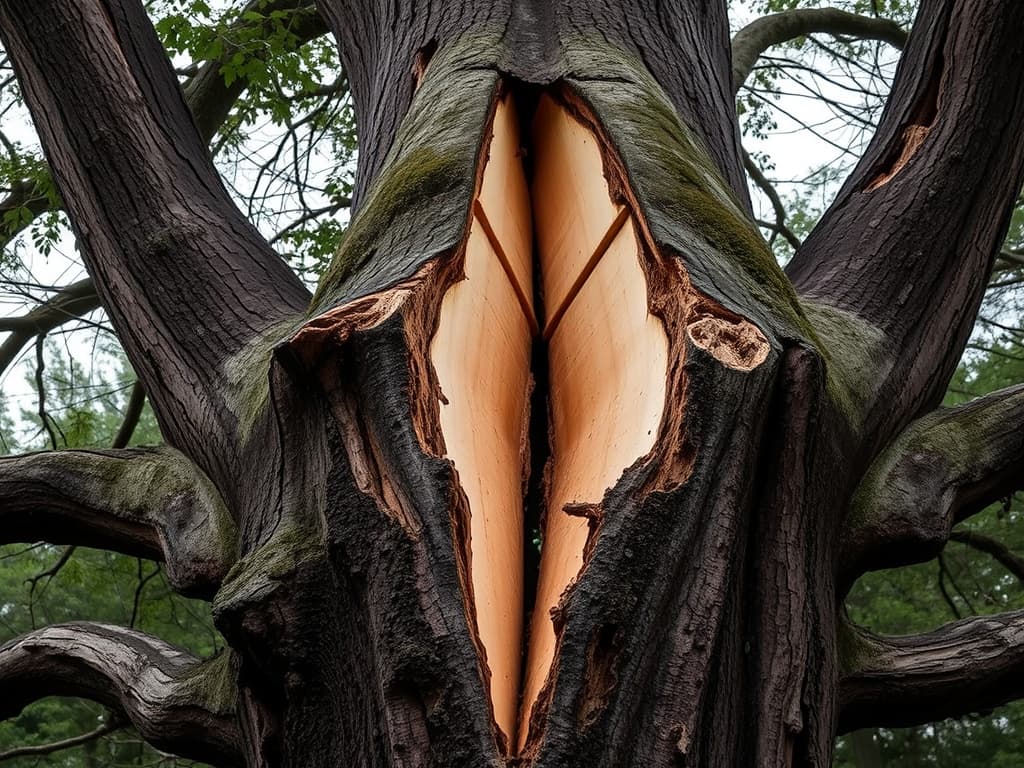
Most storm tree failures involve pre-existing structural defects detectable before the storm.
Generated by Polsia / Affordable Tree Experts
Georgia sits at the intersection of Atlantic hurricane tracks, Gulf moisture, and inland severe thunderstorm corridors. Statistically, the highest-risk months for damaging winds in Cobb County are June, July, August, and September — with named storm remnants capable of producing sustained 50–70 mph winds as late as October.
Most tree failures during storms are not random. Post-storm surveys by ISA and university researchers consistently show that trees that fail had pre-existing structural defects — dead wood, poor attachments, root damage, or decay — that were detectable before the storm hit.
The window to act is now, before the season peaks. A failing tree costs 5–10 times more to clean up after a storm than to remove proactively. And cleanup doesn't include what it costs to repair the fence, the roof, or the car it lands on.
Pre-Storm Visual Checklist: What to Look for from the Ground
Dead or hanging branches — sometimes called "widow makers" by arborists — are the first thing to look for. A branch that failed to leaf out this spring, or one that is visibly dead and dry while the surrounding canopy is green, can fall at any time. A storm is not required; calm conditions can bring down brittle dead wood.
Look at branch attachment angles. V-shaped, narrow-angle crotches between major limbs are weaker than U-shaped, wide-angle attachments. If you can see bark growing into the crotch (included bark), that attachment is at elevated risk of splitting under wind or ice load.
Look at the base of the tree. Soil heaving, visible root flare movement, mushrooms fruiting at the base, and cracking bark low on the trunk are all red flags. Check the crown for asymmetry — a crown that's significantly heavier on one side will pull the tree in that direction under wind loading.
Finally, look at what's in the fall zone. A tree with modest structural concerns may still be low-priority if it can only fall into an open yard. The same tree positioned over a house, a vehicle, or a fence line needs immediate attention.
Power Line Clearance: Why This Is Utility-Licensed Work
If branches from your tree are touching or growing toward power lines, do not attempt to trim them yourself. In Georgia, trimming within 10 feet of an energized power line requires a utility line clearance credential — a separate certification from standard ISA arborist certification.
Georgia Power and utility companies have dedicated line-clearance contractors. Property owners can also hire ISA-certified arborists who hold a line clearance credential (sometimes noted as a Line Clearance Tree Worker certification) to perform work near lines on private property.
The hazard is not just electrocution on contact — it's arc flash, which can kill from several feet away. It's also falling limbs on energized lines, which can cause outages that affect your neighborhood and create secondary hazards. Call your utility first. If a private contractor is needed, verify their line clearance credential before any work begins near energized lines.
Root Zone Factors That Increase Storm Risk
A tree's root system is what keeps it in the ground during a storm. Root damage — from construction, soil compaction, trenching, or disease — is one of the leading causes of whole-tree windthrow failures in Georgia.
Saturated soil dramatically reduces root-holding strength. A tree that might stay standing in 60 mph winds on dry, firm ground can fail at 40 mph after three days of heavy rain. If a major storm is forecast within 24–48 hours of significant rainfall, trees you were planning to "watch and wait" on deserve a second look.
Construction history matters. If any excavation, grading, or trenching has occurred within 15–20 feet of a mature tree in the past decade, roots may have been cut or crushed. Root damage symptoms — crown dieback, slow decline, yellowing leaves — often don't appear until 3–7 years after the event, so a tree can look fine while its anchor roots are compromised.
What a Pre-Storm Arborist Visit Accomplishes
A certified arborist performing a pre-storm assessment can identify hazards that aren't visible from the ground, evaluate attachment strength on major limbs, probe the root collar for decay, and give you a clear priority ranking: which trees or limbs need to come down before the season, which can be watched, and which are fine.
The cost of a pre-storm assessment and the resulting preventive pruning or removal typically runs $200–$1,500 for a residential property, depending on the number of trees and the work needed. Storm-damage cleanup — including emergency service premiums, debris hauling, and structure repairs — routinely runs $5,000–$25,000 or more for a single tree failure over a house.
Pre-storm work also protects your insurance position. Most homeowner policies require that a property owner takes reasonable steps to maintain known hazards. A tree you knew was declining and did nothing about is a much harder claim than storm damage to a tree that had no warning signs.
Post-Storm Safety: What Not to Do
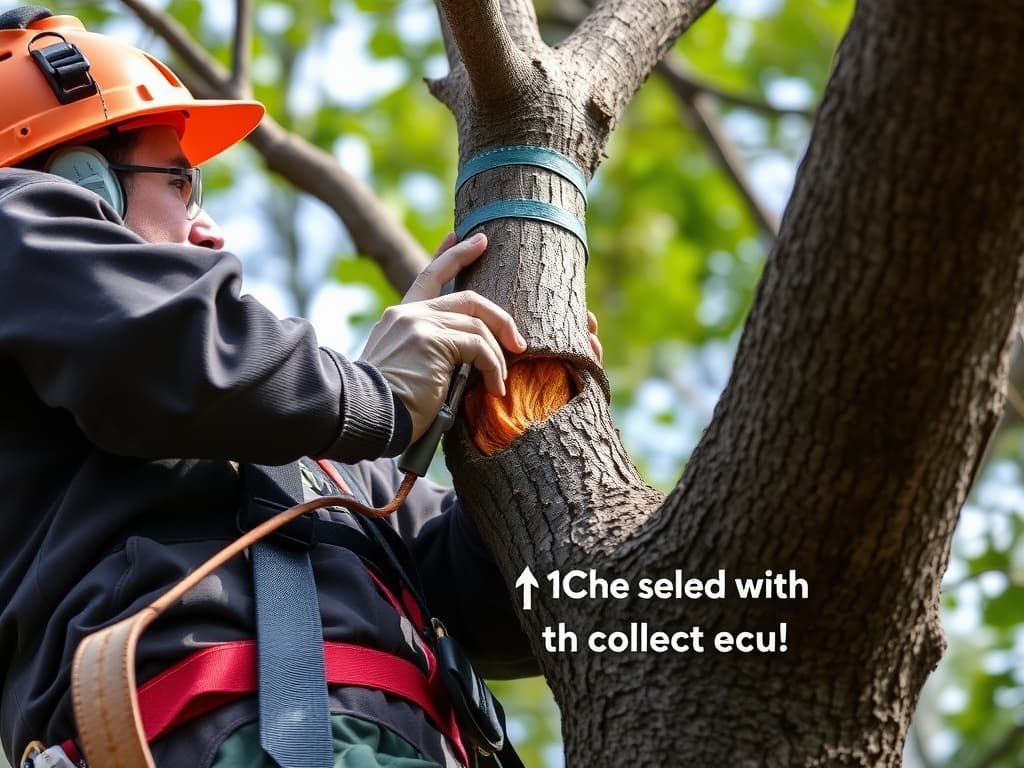
Proper collar cuts during cleanup prevent decay from entering the main stem.
Generated by Polsia / Affordable Tree Experts
After a storm, resist the urge to immediately start cutting. Two of the most common post-storm injuries involve chainsaws near downed lines and ladder work on hanging branches.
Never approach a tree that is in contact with, near, or draped over a power line. Even if the line appears dead, assume it is energized. Call your utility's emergency line and wait for their crew to clear the scene. A tree tangled in a downed line is a utility emergency, not a tree emergency.
Hanging branches — branches that have broken but remain suspended in the crown, held by bark strips or other limbs — are called "widow makers" for good reason. They can fall without warning when disturbed by vibration, additional wind, or simply the natural settling of the tree. Do not stand under them, do not attempt to knock them down with a pole, and do not let anyone climb into a crown with hanging wood until the hazard is professionally assessed and cleared.